- More Blogs

- Eye Care Tourism in China: How AI Is Transforming Vision Treatment Travel
Eye Care Tourism in China: How AI Is Transforming Vision Treatment Travel
 Mar 26, 2026
For many international patients, correcting vision problems or treating eye diseases can be far more complicated than expected. In countries with highly regulated healthcare systems, patients often face long waiting lists for specialist appointments and elective procedures. In some regions, scheduling surgeries such as LASIK or cataract treatment can take several months. At the same time, the cost of advanced ophthalmology care—particularly in North America and parts of Europe—continues to rise, placing financial pressure on patients who may not have full insurance coverage for vision correction procedures.
Beyond cost and waiting times, navigating complex healthcare systems can also be challenging. Patients must research qualified specialists, compare hospitals, verify treatment options, and understand different surgical techniques. For individuals who are already dealing with declining vision or eye discomfort, this process can feel overwhelming.

As a result, eye care tourism has emerged as a practical solution for patients seeking faster access to advanced treatments. By traveling abroad, patients can often schedule procedures more quickly, access experienced specialists, and significantly reduce treatment costs. At the same time, medical travelers increasingly expect high clinical standards, transparent pricing, and a smooth planning process.
China is quickly emerging as one of the destinations meeting these expectations. Over the past decade, the country has made significant investments in healthcare infrastructure, particularly in specialized medical fields such as ophthalmology. Today, many major cities host modern eye hospitals equipped with advanced diagnostic technologies and internationally trained surgeons. These facilities offer a wide range of procedures—from routine vision correction to complex retinal treatments—at costs that are often considerably lower than those found in Western healthcare systems.
However, while medical opportunities are expanding, planning an international treatment trip can still involve many moving parts. Patients must research hospitals, evaluate surgeons’ qualifications, compare procedure costs, arrange consultations, and coordinate travel logistics such as flights, accommodation, and post-surgery recovery time. Without the right guidance, organizing a medical trip abroad can be time-consuming and confusing.
Why International Patients Choose China for Eye Care
Advanced Ophthalmology Technology
China has invested heavily in ophthalmology research and medical technology over the past decade. As a result, many leading eye hospitals now operate with equipment and surgical systems comparable to those found in top clinics in Europe and North America. These technologies allow doctors to diagnose eye conditions earlier, perform procedures with greater precision, and improve long-term treatment outcomes.
Several advanced technologies are now commonly used in major ophthalmology centers across China.
Key technologies include:
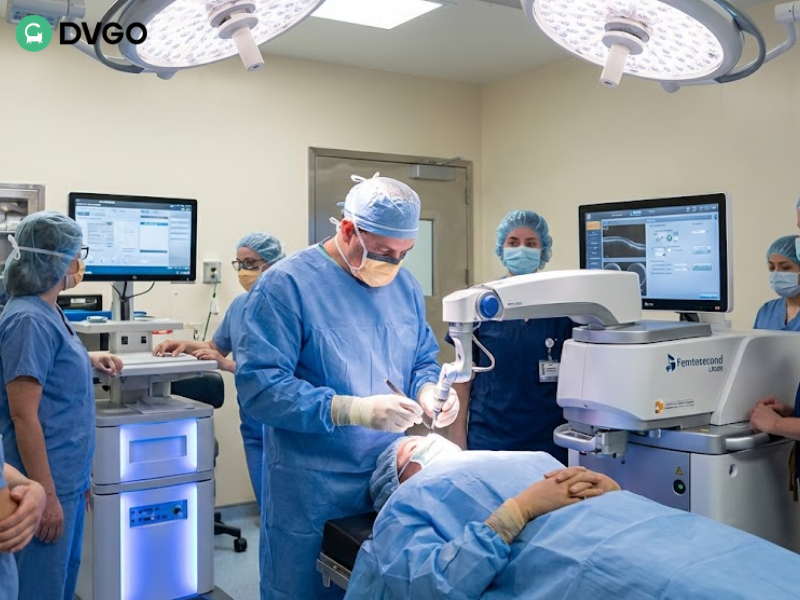
Femtosecond laser systems used in precision vision correction procedures such as LASIK. These lasers allow surgeons to create extremely accurate corneal incisions, improving safety and consistency during surgery.
SMILE laser technology, a minimally invasive refractive surgery that corrects myopia through a small corneal incision. Because the procedure requires less disruption to the corneal structure, recovery times are often shorter and postoperative dry eye symptoms may be reduced.
Optical Coherence Tomography (OCT), an imaging technology that produces highly detailed cross-sectional images of the retina. OCT plays a critical role in diagnosing retinal diseases such as macular degeneration, diabetic retinopathy, and glaucoma.
AI-assisted diagnostic systems, which analyze large datasets of eye scans to help doctors detect early signs of eye disease that may not be immediately visible during routine examinations.
Together, these technologies enable ophthalmologists to make more accurate diagnoses and perform surgeries with higher precision. For international patients, this combination of modern equipment and advanced surgical techniques provides reassurance that they are receiving care aligned with global medical standards.
Highly Experienced Eye Surgeons
Another important factor attracting international patients to China is the expertise of ophthalmologists working in the country’s major medical centers. Many of these specialists have extensive surgical experience and participate actively in global ophthalmology research and training programs.
Experienced ophthalmologists often bring together multiple strengths, including:
Decades of surgical practice, with thousands of procedures performed
Training or fellowship experience at international medical institutions
Participation in academic research and medical conferences
Specialization in advanced fields such as refractive surgery, retina care, or corneal transplantation
For patients considering surgery abroad, evaluating a surgeon’s experience is one of the most important steps in the decision-making process. Factors such as surgical volume, complication rates, and patient satisfaction can provide valuable insight into the doctor’s expertise.
Digital platforms like DVGO make this evaluation process significantly easier. Instead of relying on scattered online information, patients can review detailed surgeon profiles, examine medical credentials, and compare treatment specialties before scheduling consultations. This transparency allows international patients to make more informed decisions and feel confident about their choice of doctor and hospital.

Affordable Vision Treatments
Eye care procedures can be extremely expensive in countries such as the United States, Canada, or Australia. China offers comparable treatments at significantly lower prices while maintaining high medical standards.
Average Cost Comparison
| Procedure | United States | Europe | China |
| LASIK Surgery | $2,500 – $4,000 | $2,000 – $3,500 | $900 – $1,800 |
| SMILE Surgery | $3,000 – $4,500 | $2,500 – $4,000 | $1,200 – $2,000 |
| Cataract Surgery | $3,500 – $6,000 | $3,000 – $5,000 | $1,200 – $2,500 |
| Retina Treatments | $4,000+ | $3,500+ | $1,500 – $3,000 |
Even when travel expenses are included, international patients can still reduce overall medical costs significantly.
Most Popular Eye Care Procedures for Medical Travelers
LASIK and Vision Correction
LASIK remains one of the most common procedures for patients traveling abroad for eye care. The surgery reshapes the cornea to correct refractive errors such as myopia, hyperopia, and astigmatism.
Advantages of LASIK include:
Short procedure time (often under 20 minutes)
Rapid vision improvement
Minimal discomfort
Reduced dependence on glasses or contact lenses
Many Chinese eye hospitals now also offer SMILE surgery, a newer minimally invasive procedure that requires a smaller incision and may reduce postoperative dry eye symptoms.
Cataract Surgery
Cataracts are one of the leading causes of vision impairment worldwide. Modern cataract surgery replaces the cloudy natural lens with a clear artificial intraocular lens (IOL).
Advanced IOL options available in many Chinese hospitals include:
Multifocal lenses for near and distance vision
Toric lenses to correct astigmatism
Extended depth-of-focus lenses for improved visual range
These technologies allow patients to restore vision and often reduce the need for glasses.
Specialized Ophthalmology Treatments
Some international patients also travel to China for complex eye conditions requiring specialized expertise.
These treatments may include:
Retina disease therapy
Glaucoma surgery
Corneal transplant procedures
Pediatric ophthalmology care
Large medical centers often integrate research institutes and multidisciplinary teams capable of managing complicated cases.
Combining Vision Treatment with Travel
One of the unique advantages of medical tourism is the opportunity to combine healthcare with cultural exploration. China’s major cities offer rich travel experiences that can complement the recovery period after eye procedures.
Beijing
Beijing is home to several major medical universities and ophthalmology hospitals.
During recovery, visitors can explore:
The Great Wall
The Forbidden City
The Temple of Heaven
These iconic landmarks offer cultural experiences without requiring intense physical activity.
Shanghai
Shanghai combines modern infrastructure with international accessibility. Many private eye clinics serving foreign patients are located here.
Popular attractions include:
The Bund skyline
Yu Garden
Contemporary art districts
Shanghai’s modern environment often makes it a comfortable entry point for first-time visitors to China.
Guangzhou and Southern China
Guangzhou is another important healthcare hub with strong ophthalmology research programs.
Visitors can enjoy:
Traditional Cantonese cuisine
Historic temples and cultural districts
Modern shopping centers
The city’s warm climate and relaxed pace can make recovery periods more pleasant.
How DVGO AI Simplifies Eye Care Tourism
Planning medical travel usually requires weeks of research. Patients must compare clinics, verify doctors, understand treatment costs, and coordinate travel logistics.
DVGO was designed to simplify this entire process.
As an AI-powered medical travel assistant, DVGO helps patients organize every step of their eye care journey in one place.
Through DVGO, patients can:
Discover trusted ophthalmology hospitals in China
Compare LASIK, SMILE, and cataract surgery options
Review surgeon experience and patient feedback
Estimate treatment costs before traveling
Plan flights, accommodations, and recovery schedules
By combining healthcare insights with travel planning tools, DVGO reduces the uncertainty that often comes with international medical travel.
Compare Eye Clinics Instantly with DVGO
Instead of manually researching dozens of hospital websites, patients can quickly evaluate clinics through DVGO’s comparison tools.
| Eye Clinic | City | Procedure | Avg Cost | Patient Rating | Plan with DVGO |
| VisionCare Eye Center | Shanghai | LASIK | $1,500 | 4.8 / 5 | Start Planning |
| Beijing International Eye Hospital | Beijing | Cataract Surgery | $2,200 | 4.7 / 5 | Start Planning |
| Southern Vision Institute | Guangzhou | SMILE Surgery | $1,600 | 4.9 / 5 | Start Planning |
DVGO analyzes patient needs and medical information to recommend the most suitable clinics and treatment timelines.
Preparing for Your Eye Care Trip
Pre-Treatment Consultation
Before traveling, patients can submit medical documents such as:
Vision prescriptions
Eye examination reports
Retinal imaging scans
Doctors review these records and provide preliminary treatment recommendations.
DVGO allows patients to upload medical information directly and receive AI-assisted clinic recommendations, speeding up the decision process.
Travel and Medical Documentation
International patients should prepare:
Passport and visa
Medical history
Previous eye surgery records
Prescription details
Flexible travel arrangements are recommended in case additional tests or follow-up appointments are required.
Recovery and Post-Surgery Care
After vision correction procedures, patients should follow doctor recommendations carefully.
Typical recovery guidelines include:
Avoid rubbing the eyes
Use prescribed eye drops regularly
Limit screen exposure during the first few days
Attend follow-up consultations
Many hospitals now offer remote follow-up appointments, allowing patients to continue monitoring recovery after returning home.
Start Planning Your Eye Care Journey with DVGO
Eye care tourism in China combines advanced medical treatment, experienced surgeons, and competitive pricing. Patients can restore vision while exploring some of the world’s most fascinating destinations.
However, the complexity of international medical travel can discourage many potential patients.
That is why platforms like DVGO are becoming an essential part of modern medical tourism. By integrating AI-powered clinic comparison, treatment planning, and travel coordination, DVGO makes it easier than ever to organize a safe and efficient eye care journey.
Instead of navigating multiple systems and providers, patients can plan their entire medical trip in one place.
Download DVGO and start planning your personalized eye care journey today.